Freshwater Community Fish: The Best Peaceful Fish for Home Aquariums
Freshwater community tanks are one of the best ways to build a beautiful home aquarium without signing up for constant territorial problems, aggressive fish behavior, or complicated species management. When they are planned well, community tanks are colorful, active, beginner-friendly, and much easier to live with day to day than many specialty setups.
The problem is that many so-called “community fish” lists are too generic to be useful. They lump together fish with very different flow preferences, temperatures, activity levels, group-size needs, and temperaments. The result is a tank that may look good on paper but feels unstable in real life.
This guide breaks down what actually makes a good freshwater community fish, which species are best for home tanks in the USA, how to group them, and what mistakes to avoid if you want a peaceful aquarium that lasts.
Freshwater Community Fish at a Glance
| Fish Type | Best For | Why People Like Them | Main Watch-Out |
|---|---|---|---|
| Tetras | Small to medium community tanks | Colorful, active, easy to group | Some species are nippy or need larger groups than beginners expect |
| Rasboras | Calm community setups | Peaceful schooling behavior and easy compatibility | Best color and confidence usually come from proper group size |
| Corydoras | Bottom-level activity in peaceful tanks | Great cleanup-style presence and beginner appeal | Must be kept in groups and need compatible substrate and flow |
| Guppies | Bright beginner tanks | Color, livebearing interest, and easy feeding | Can overpopulate and may not fit every community mix |
| Platies | Friendly mixed-species tanks | Hardy, colorful, adaptable livebearers | Breeding can snowball if both sexes are kept |
| Cherry barbs | Slightly more active community tanks | Good color and movement without extreme aggression | Still better in groups and not ideal with every timid species |
| Otocinclus | Mature planted tanks | Small algae-eating support fish | Not the best early-addition fish for brand-new tanks |
What Makes a Fish Good for a Community Tank?
A true community fish usually has most of these traits:
- peaceful or at least non-territorial temperament
- similar water temperature and parameter needs to other common community species
- manageable adult size for a home aquarium
- predictable feeding behavior
- low risk of attacking fins, harassing tank mates, or dominating the whole tank
The best community fish also tolerate normal beginner mistakes better than more delicate fish. That matters because home aquariums succeed when the setup is forgiving enough to survive real life, not just perfect maintenance.
Why Community Tanks Work So Well for Beginners
Freshwater community tanks have three major advantages:
1. They Spread Visual Interest Across the Whole Tank
Instead of one fish doing all the work, you get movement at different levels. Schooling fish animate the middle of the tank, corydoras or similar fish bring life to the bottom, and a few accent fish can add personality without taking over.
2. They Usually Offer Better Margin for Error
Compared with cichlid tanks, aggressive specialty fish, or many saltwater systems, peaceful freshwater communities are easier to stock, easier to feed, and easier to keep stable.
3. They Scale Well
You can build a good community tank in a 10 gallon aquarium, a 20 gallon long, a 29 gallon, or a 55 gallon display. The concept grows with the tank instead of requiring a specialty setup from the start.
The Best Freshwater Community Fish for Most Home Tanks
1. Tetras
Tetras are often the first fish people think of when they imagine a community tank, and for good reason. Many tetra species are colorful, active, easy to feed, and widely available.
Best beginner-friendly tetra choices
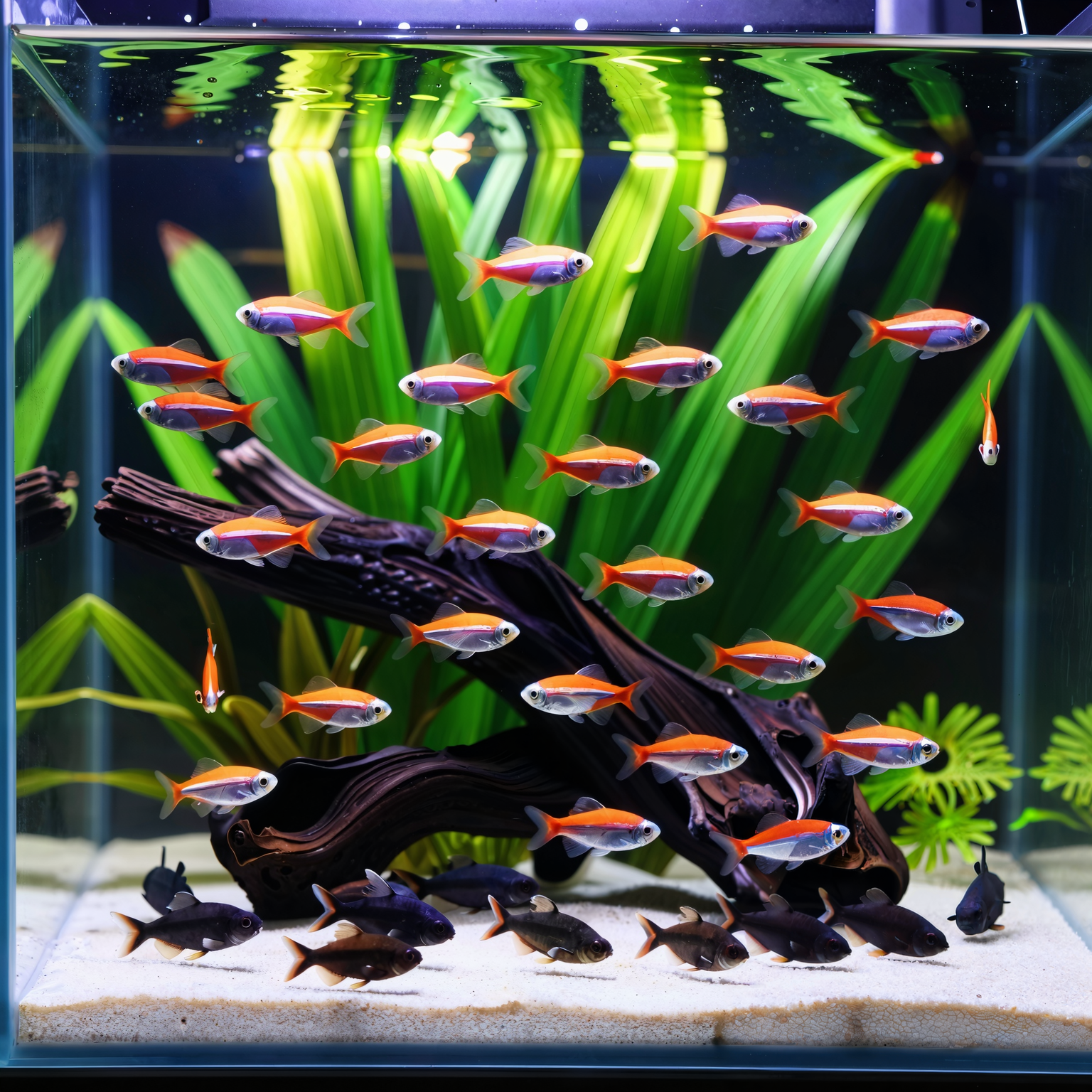
- ember tetras
- black neon tetras
- rummynose tetras in stable, established tanks
- lemon tetras for slightly larger tanks
Why they work
- strong schooling effect
- easy mid-water movement
- broad compatibility with other peaceful fish
Watch-outs
- some tetra species are more nippy than others
- many look best only when kept in larger groups
- very small tanks limit your choices
2. Rasboras
Rasboras are some of the best true community fish in the hobby. They are generally calmer than many tetras and often feel especially well-suited to peaceful home aquariums.
Strong options
- harlequin rasboras
- chili rasboras for nano tanks
- lambchop rasboras
Why they work
- peaceful nature
- strong group behavior
- easy to combine with bottom fish and calm centerpiece fish
Watch-outs
- tiny species can get visually lost in very large tanks
- they still need real schools, not token groups of three
3. Corydoras
Corydoras are one of the best bottom-dwelling fish groups for freshwater community tanks. They add motion to the lower part of the aquarium without bringing the aggression or waste load of many larger bottom fish.
Strong options
- pygmy corydoras for small tanks
- panda corydoras
- bronze corydoras
- sterbai corydoras for warmer tanks
Why they work
- peaceful and highly compatible
- constantly active on the bottom
- excellent group behavior
Watch-outs
- they need companions of their own kind
- they are not solitary cleanup fish
- sharp substrate can be rough on their barbels over time
4. Guppies
Guppies are bright, accessible, and beginner-friendly, especially for people who want motion and color in a small to medium freshwater tank.
Why they work
- easy to feed
- visually bright without needing a large tank
- adaptable to many home setups
Watch-outs
- mixed-sex groups can reproduce quickly
- long fins may attract nippy tank mates
- not every community mix is as peaceful as store signage suggests
5. Platies
Platies are another excellent beginner fish for community tanks. They are hardy, social, colorful, and generally easy to work into practical home setups.
Why they work
- sturdy beginner reputation
- broad color variety
- easy to combine with many peaceful species
Watch-outs
- like guppies, they can breed often
- they still need a sensible stocking plan instead of random mixing
6. Cherry Barbs
Cherry barbs give you more color and activity than many beginners expect, but without the same aggression issues associated with some other barb species.
Why they work
- attractive color
- stronger activity without becoming a fight tank
- good fit for medium community setups
Watch-outs
- still not the first choice for every ultra-calm or long-finned setup
- better in a proper group
Best Community Fish by Tank Size
| Tank Size | Best Starter Fish Choices | Best Use |
|---|---|---|
| 5 to 10 gallons | betta-centered setups, chili rasboras, pygmy corydoras in carefully planned tanks | Nano and desktop aquariums |
| 10 to 20 gallons | ember tetras, harlequin rasboras, pygmy corydoras, guppies, platies | Beginner home tanks |
| 20 to 30 gallons | larger tetra groups, corydoras schools, cherry barbs, livebearer mixes | Best overall flexibility range |
| 40 gallons and up | larger schools, more layered communities, additional centerpiece options | Strongest visual and stocking stability |
For most beginners, 20 to 30 gallons is the easiest freshwater community range. It gives enough water volume for stability and enough room to build a tank with visible schooling behavior instead of a cramped fish list.
Best Freshwater Community Fish by Situation
| Your Situation | Best Fish Choices | Why They Fit |
|---|---|---|
| First aquarium | harlequin rasboras, ember tetras, corydoras, platies | Peaceful and forgiving |
| Small office tank | rasboras, small tetra schools, one calm centerpiece fish | Quiet visual movement without too much aggression |
| Nano planted tank | chili rasboras, pygmy corydoras, shrimp if compatible | Small scale with gentle behavior |
| Family tank with visible color | platies, guppies, black neon tetras, cherry barbs | Easy color and activity |
| Bottom activity needed | corydoras | Best beginner-friendly lower-level fish |
| Low-drama mixed tank | rasboras + corydoras | One of the safest combinations in the hobby |
Sample Freshwater Community Stocking Plans
10 Gallon Calm Community Plan
- 10 ember tetras
- 6 pygmy corydoras
Why it works: one main school plus one small bottom group keeps the tank visually active without overcomplicating compatibility.
20 Gallon Long Community Plan
- 10 harlequin rasboras
- 8 corydoras
Why it works: this is one of the cleanest beginner community structures because the fish occupy different zones and share a peaceful temperament.
29 Gallon Color-Forward Community Plan
- 12 black neon tetras
- 8 corydoras
- 6 cherry barbs
Why it works: gives stronger visual movement and more color while still staying in community territory if the tank is maintained well.
The Biggest Community Tank Mistakes
Mixing “Peaceful” Fish Without Checking Temperament Details
Not all peaceful fish are peaceful in the same way. Some are timid. Some are active. Some are fin-nippers. Some dominate feeding. The label alone is not enough.
Keeping Schooling Fish in Tiny Groups
Many community fish need the confidence of a real group. A school of six to ten often behaves much better than a scattered mix of two or three fish from several species.
Over-Mixing Species
A better beginner tank usually has fewer species with stronger group numbers, not a random sampler pack.
Treating Bottom Fish as Decorations
Corydoras and similar fish are not cleanup gadgets. They are social fish with real care needs, group-size needs, and feeding needs.
Adding Too Many Fish Too Fast
Even peaceful community fish create waste. Add stock in stages and let the tank stabilize.
Fish to Avoid in a Peaceful Freshwater Community Tank
Some fish can work in special cases, but they are not ideal for the average beginner community setup:
- common plecos, because they outgrow many home tanks and create heavy waste
- goldfish, because their temperature and care needs do not match tropical community setups
- tiger barbs in many beginner mixes, because they can be too nippy
- large cichlids, because they shift the tank out of true community territory
- aggressive gourami combinations, depending on tank size and species
How to Build a Better Community Tank
1. Choose One Main School
Start with one visible mid-water species and give it a proper group size.
2. Add One Bottom Group
Corydoras are usually the easiest answer here.
3. Add a Third Group Only if the Tank Supports It
Do not rush to maximize variety. A clean fish plan almost always looks better.
4. Match the Filter to the Stocking Plan
Community tanks usually do best with a reliable HOB filter or other easy-maintenance filtration path. Good flow and stable biological filtration matter more than chasing the biggest filter possible.
5. Feed for the Whole Tank
Make sure mid-water fish and bottom fish both get food. One of the easiest beginner mistakes is assuming leftovers are enough for bottom dwellers.
My Take
The best freshwater community fish for most home aquariums are rasboras, peaceful tetras, corydoras, platies, and carefully chosen guppies. For many beginners, the safest and most attractive path is simple: choose one schooling fish, choose one bottom group, and resist the urge to over-mix species.
A strong community tank is not built by collecting as many fish names as possible. It is built by choosing fish that actually fit together.
Read Next
- Read the beginner tank setup guide if you are planning your first aquarium.
- Read the aquarium filter types guide if you still need to choose filtration.
- Read the freshwater vs saltwater guide if you are still deciding what type of tank to build.
Keep moving from reading to action.
Use the related guides to go deeper, check the shop if you need matching accessories, or join the email list for new guides and product updates.
Get new guides, product updates, and practical aquarium planning notes by email without waiting to check back manually.
Use the contact page if you want direct help instead of general email updates.
Related Guides
Aquarium Filter Types Explained
Compare sponge, hang-on-back, canister, internal, and undergravel filters so you can choose the right aquarium filtration system for your tank size, fish, budget, and maintenance style. Real lessons from tanks in Norman, Oklahoma.
Aquarium Lighting Guide
Learn how to choose the right aquarium lighting for your home or office tank — intensity, spectrum, duration, timers, planted vs fish-only setups, and algae control. Real lessons from tanks in Norman, Oklahoma.
Aquascaping Basics: Creating Stunning Underwater Landscapes
Learn practical beginner aquascaping rules for home and office tanks — focal points, negative space, hardscape, plant grouping, and layouts that look intentional instead of cluttered. Real lessons from tanks in Norman, Oklahoma.